Brixton street access removals guide
Posted on 29/04/2026
Moving in Brixton can be brilliantly local and brilliantly awkward at the same time. One minute you're dealing with a narrow terraced street, the next you're trying to line up a van without blocking a bus lane, upsetting a neighbour, or discovering the loading space has already vanished. This Brixton street access removals guide is here to make that process calmer, safer, and a lot more predictable.
Whether you're moving from a flat off Brixton Road, a maisonette near Acre Lane, or an upper-floor property tucked behind a busy high street, the challenge is often not the lifting itself. It's the access. The turning circles, the stairs, the parking, the timing, the little logistics that quietly decide whether moving day feels manageable or like a half-finished headache. Let's get that sorted.
![A quiet street scene showing an urban residential area with a paved road, lined with modern multi-storey buildings on the right, featuring large glass windows and balconies. A white van is parked on the right side near a driveway, while black metal railings separate the sidewalk from the road. On the left, there are large mature trees with green foliage, creating shade over the pavement, which is scattered with fallen yellow leaves, suggesting an autumn setting. The road appears wet, indicating recent rain, and is slightly inclined towards the background where additional buildings are visible. This scene depicts a typical environment suitable for house removals or furniture transport, with no activity visible but a clear indication of urban living prepared for home relocation or loading processes, fitting the context of [PAGE_TITLE] by Removal Van Lambeth.](/pub/blogphoto/brixton-street-access-removals-guide1.jpg)
Why Brixton street access removals guide Matters
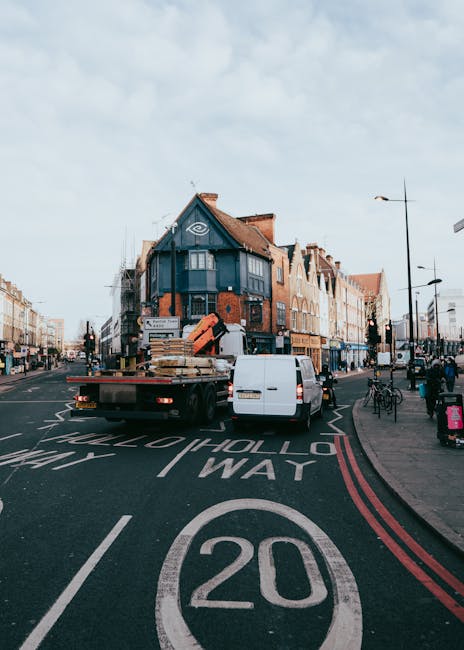
Brixton is lively, dense, and full of character. That's part of the appeal. But from a removals point of view, character can mean tight streets, limited waiting space, busy traffic, and homes that were not exactly designed with modern moving vans in mind. If you plan a move without checking access properly, the day can spiral fast.
Access issues affect almost everything: the size of vehicle you can use, how many porters you need, whether furniture can be carried safely, and how long the job will take. Even a straightforward move can become slow if the van has to park half a street away. And in Brixton, a few extra metres can matter more than people expect.
There is also the neighbour factor. A van blocking a doorway or taking over a narrow road for too long can cause friction. Nobody wants their moving day to start with a complaint from the flat upstairs. A good access plan keeps things polite, efficient, and far less stressful.
If you are already comparing providers, it helps to look beyond basic transport and think about the full move. Pages like removals in Lambeth and house removals support are useful starting points for understanding service levels, but local access planning is what often separates a smooth move from a messy one.
How Brixton street access removals guide Works
At its simplest, street access planning means matching the moving plan to the real conditions outside your property. It is part observation, part common sense, and part organisation. You look at where the vehicle can stop, how far items must be carried, whether stairs or gates create extra handling, and what the local traffic pattern will be like on the day.
For many Brixton moves, the process starts with a survey or at least a detailed phone assessment. A mover will want to know:
- the exact address and street layout
- whether parking is available directly outside
- if there are permits, loading restrictions, or controlled parking zones
- how many floors are involved
- whether large items like wardrobes, sofas, or pianos need special handling
- if there are awkward entries such as narrow hallways, split-level stairs, or shared access
The better this information is, the more accurate the plan becomes. To be fair, most access problems are not dramatic on their own. A single tight doorway or a van that cannot park close enough is usually the real issue. But combine two or three small hurdles and suddenly the move takes longer, needs extra labour, or requires a smaller vehicle and shuttle-style loading.
If you need flexible local transport for short-distance moves or awkward access, a man with a van in Lambeth can be a practical option. For larger household moves, you may prefer a more complete house removals service in Lambeth with additional handling support.
Key Benefits and Practical Advantages
Good access planning is not just about avoiding disaster. It has real, everyday benefits that people notice straight away on moving day.
- Less wasted time. The team spends less time circling streets or carrying items long distances.
- Lower handling risk. Fewer unnecessary lifts and turns mean less chance of knocks, scrapes, or strain.
- Cleaner scheduling. You get a more realistic timeline and fewer surprises.
- Better cost control. Time saved is often money saved, especially where labour is billed by the hour.
- Less neighbour disruption. A tidy loading plan is usually easier on everyone nearby.
There is another advantage people sometimes miss: confidence. Once access is properly planned, the rest of the move feels less chaotic. You can focus on packing labels, keys, and utility handovers rather than wondering whether the van is going to fit anywhere near the building. That calm matters more than people admit.
For fragile or awkward furniture, the benefits are even clearer. If you are moving oversized chairs, wardrobes, or dining tables, a dedicated furniture removals service can reduce the risk of damage and make tight access feel much less like a puzzle. And if you have a valuable instrument, a specialist piano removals option is worth considering rather than hoping for the best. Honestly, hoping for the best is not a strategy.
Who This Is For and When It Makes Sense
This guide is useful for a lot more people than first-time movers. In Brixton especially, access planning matters for anyone moving through narrow roads, busy junctions, or multi-storey properties.
It makes particular sense if you are:
- moving from or to a flat with no lift
- living on a street with controlled parking or limited waiting space
- moving during a busy period, such as a weekend or month-end
- relocating a family home with bulky furniture
- moving office equipment into a commercial property
- handling a same-day move with limited room for error
Students and renters often need access guidance too, especially around shared entrances, stairs, and rushed check-in times. If that sounds familiar, student removals in Lambeth and flat removals in Lambeth are relevant services to explore.
Office moves are a separate beast again. Access may depend on lift bookings, building management rules, or loading bay time windows, which can be a bit fussy. If that is your situation, see office removals in Lambeth for a more business-focused approach.
Step-by-Step Guidance
Here is the practical version, stripped of fluff.
1. Check the street, not just the postcode
Two homes can be only a few minutes apart and still have very different access conditions. One may have a wide curb and easy parking; the other may sit on a tight one-way road with constant passing traffic. If possible, walk the route from the nearest realistic parking spot to your front door.
2. Measure the problem items early
Measure sofas, beds, wardrobes, desks, and any item that looks awkward even before moving day. Door widths, stair turns, and hallway corners matter just as much as the furniture itself. If a mattress can bend, great. If it cannot, you need to know now, not when it is wedged halfway down the stairs.
3. Decide whether a larger van or smaller van makes sense
A bigger vehicle is not always better. On a Brixton street, a smaller van with more shuttle trips can actually be faster if parking is tight. On the other hand, if loading access is good and everything can be brought out quickly, a larger vehicle may be more efficient. The right answer depends on the street, not just the size of the move.
4. Plan parking and loading windows
Check what applies to your street. Some areas need permits, some have resident bays, and some allow loading only at certain times. If you are unsure, ask your moving provider what they usually do in Lambeth. The point is not to become a parking expert overnight. It is simply to avoid a morning surprise.
5. Build in extra time for stairs and shared access
Shared entrances, narrow stairwells, and awkward landings slow everything down. They also require more care. If there are long carries from the van to the property, tell the removals team upfront. That information changes staffing and timing.
6. Prepare the property before the crew arrives
Clear hallways, move small loose items into boxes, and keep keys, documents, and essentials somewhere obvious. The less clutter there is, the smoother the carry route. A tidy route feels almost luxurious on moving day. Almost.
7. Keep a backup plan
Street access in Brixton can change quickly. A parking bay can be occupied, roadworks can appear, or a delivery van can block the best stopping point. A sensible backup plan might be a different loading spot, a staggered loading approach, or a brief wait while a space opens up.
If you are comparing the most suitable service style, a broader removals services overview can help you work out whether a full service or a more flexible man-and-van setup is the better fit.
Expert Tips for Better Results
These are the small adjustments that tend to make the biggest difference.
- Share photos, not just descriptions. A quick image of the entrance, stairwell, or street is often more useful than a paragraph of explanation.
- Book access-sensitive jobs earlier in the day. Streets are often calmer before the day gets busy.
- Label items by room and priority. That makes unloading into a tight property much less chaotic.
- Protect floors and corners. Narrow hallways and paintwork take a beating during rushed moves.
- Use storage if the access is not quite ready. If your new place is not ready yet, or the move needs staging, storage in Lambeth can make the handover easier.
A useful little rule: if a job feels like it needs "just one more bit of thinking", it probably does. Rushing access planning is where people get caught out.
And if you are packing yourself, do not leave the awkward items until the last evening. Those always take longer. It's the box you forgot behind the wardrobe, the cable tangle, the lamp with the shade that no longer seems to fit any sensible logic. You know the sort.
For help getting materials in order, see packing and boxes in Lambeth. Good packing is not glamorous, but it genuinely helps access issues because stacked, labelled boxes are quicker and safer to move.
Common Mistakes to Avoid
Most access problems come from a handful of repeat mistakes. The good news is that they are avoidable.
- Assuming the van can park right outside. In Brixton, that is often not a safe assumption.
- Forgetting to mention stairs, turns, and basement access. These details change everything.
- Not checking if a sofa or wardrobe actually fits. Measuring late is still measuring late.
- Booking a service that is too small for the access challenge. Cheap can become expensive if the job drags on.
- Leaving parking arrangements until the morning. That is usually where the stress starts.
- Ignoring building rules. Some blocks have very specific moving slots or lift reservations.
Another mistake is not being honest about the level of difficulty. People sometimes downplay access because they do not want to make the move sound complicated. But a slightly awkward entrance is not a flaw in your plan; it is just part of the reality. Tell the truth and let the removals team respond properly.
Tools, Resources and Recommendations
You do not need a toolbox full of specialist kit for every move, but a few practical items help a lot:
- Measuring tape for doors, halls, and furniture dimensions
- Phone camera to capture street access, loading points, and staircases
- Sticky labels or marker pens for clear room-by-room box marking
- Protective wrapping for corners, glass, and surfaces
- Copies of parking or building instructions where applicable
It also helps to work with a local team that understands Lambeth streets and the realities of urban access. A provider such as Man and Van Lambeth can be handy for smaller or flexible moves, while removal van support in Lambeth can suit jobs that need straightforward transport with local knowledge.
When comparing providers, also look at practical trust signals. Pages like insurance and safety information, health and safety policy, and about us can tell you a lot about how seriously a company takes its work. That matters more than slick wording, frankly.
Law, Compliance, Standards, or Best Practice
For street access and removals, there are a few UK norms and practical expectations worth keeping in mind, even if the exact rules depend on the street, building, or local authority guidance.
Parking and loading rules: Brixton streets may be subject to local restrictions, controlled parking zones, loading restrictions, or permit requirements. These are usually set by the local authority and can change from street to street. Always check the specific location rather than assuming the same rule applies everywhere nearby.
Building rules: Flats, estates, and managed properties may have moving windows, lift booking rules, insurance requirements, or noise considerations. If a building manager asks for documentation, that is normal, not awkward.
Health and safety: Safe lifting, sensible team size, and careful route planning are standard practice in the removals industry. You should expect movers to consider manual handling risks, protect access routes, and avoid unsafe shortcuts. A credible provider will not want to rush a fridge down a narrow stairwell just to save five minutes. Well, not if they are sensible.
Insurance: If you are moving valuable, heavy, or fragile items, check what cover is included and what exclusions apply. Read the terms carefully. For service conditions, the terms and conditions page is worth reviewing alongside the company's insurance information.
Accessibility: If you or anyone helping with the move has mobility needs, uneven access, steep stairs, or heavy lifting should be planned around carefully. The goal is not simply to move boxes; it is to do so safely and respectfully. For wider information, the site's accessibility statement may be useful.
As a rule of thumb, best practice is simple: communicate early, measure honestly, and do not leave anything that could affect access until moving day.
Options, Methods, or Comparison Table
Different moving methods work better in different Brixton access scenarios. Here is a practical comparison.
| Option | Best for | Strengths | Trade-offs |
|---|---|---|---|
| Full removals team | Larger homes, bulky furniture, complex access | More labour, better handling, less stress | Usually higher cost than basic transport |
| Man and van | Smaller flats, student moves, flexible schedules | Handy for shorter jobs and tighter budgets | May need more loading organisation from you |
| Removal van with loading support | Moves needing transport plus practical help | Good balance of support and efficiency | Not always ideal for heavy specialist items |
| Storage-first move | Delayed completion, staggered access, renovations | Reduces pressure when timing is uncertain | Requires extra planning and an additional step |
If your move is simple but the access is awkward, a smaller vehicle with careful planning may beat a larger team. If the access is awkward and the furniture is heavy, a fuller service is often better. There is no magic answer. Just the right fit.
Case Study or Real-World Example
Imagine a two-bedroom flat near central Brixton with a narrow entrance corridor, a shared staircase, and limited stopping space outside. The residents have a bed, a sofa, a glass dining table, and several stacked boxes. Nothing unusual. Nothing catastrophic either. But the street is busy from late morning, and parking is competitive.
The move goes best when the team:
- arrives early, before traffic builds
- uses clear room labels so items can be loaded in the right order
- parks in the nearest legal loading position rather than chasing a perfect spot
- splits bulky items between two operatives for safer stair handling
- protects corners and floors before the heavy items come through
What could have been a drawn-out job becomes a measured one instead. Not easy exactly, but controlled. And that is really the goal with Brixton street access: control the variables you can control, then leave less room for the day to surprise you.
For people moving around the wider borough, local area knowledge can help too. The article on Lambeth neighbourhood local advice offers a useful sense of the local landscape, while green spaces in Lambeth shows how varied the area can be. That context matters when planning a move, especially if you are new to the neighbourhood.
Practical Checklist
Use this checklist before booking or on the run-up to moving day.
- Confirm the full address, including any flat or building number
- Check whether the street allows parking or loading near the property
- Measure large furniture and important doorways
- Note stairs, lifts, tight corners, and shared entrances
- Photograph the front of the property and access route
- Ask about permits, time restrictions, or building rules
- Decide whether you need a full team, a man and van, or storage support
- Pack and label boxes clearly by room
- Set aside essentials for the first night
- Keep the moving company's contact details handy on the day
One more thing: if access is genuinely tight, say so plainly. You are not being difficult. You are helping the mover do the job properly. That's a good thing.
Conclusion
Street access is the part of moving that people underestimate most often, and Brixton has enough quirks to make that mistake expensive. The good news is that careful planning solves most of it. Measure the route, describe the street honestly, choose the right kind of support, and give yourself enough time to work with the reality outside the front door rather than against it.
Done well, a Brixton move does not need to feel frantic. It can feel organised, calm, even a little satisfying when everything slides into place. And once the heavy stuff is in, you get that lovely moment of standing in the new place, hearing the street outside settle for a second, and realising the hard part is over.
Get a free quote today and see how much you can save.
If you are ready to talk through access, parking, timing, or a tricky layout, the easiest next step is to contact the team directly. A short conversation now can save a great deal of hassle later. And honestly, that's the kind of shortcut worth taking.
![A quiet street scene showing an urban residential area with a paved road, lined with modern multi-storey buildings on the right, featuring large glass windows and balconies. A white van is parked on the right side near a driveway, while black metal railings separate the sidewalk from the road. On the left, there are large mature trees with green foliage, creating shade over the pavement, which is scattered with fallen yellow leaves, suggesting an autumn setting. The road appears wet, indicating recent rain, and is slightly inclined towards the background where additional buildings are visible. This scene depicts a typical environment suitable for house removals or furniture transport, with no activity visible but a clear indication of urban living prepared for home relocation or loading processes, fitting the context of [PAGE_TITLE] by Removal Van Lambeth.](/pub/blogphoto/brixton-street-access-removals-guide3.jpg)


